Many people refer to early childhood as the foundation stage for development and this is when children develop ways of thinking, learning and relating to the environment around them.
Many of the early childhood education programs and development centres focus on developing the whole child growth. A central and recurring element of early childhood education is “Play”. It is not only enjoyable for young children, but also helps them to explore the environment, build understanding, develop key cognitive, social, and emotional skills in kids.
What Early Childhood Education Really Means?
Early childhood education covers the period from infancy through age five, long before formal schooling begins. These years are critical because the brain develops faster than at any other stage. Quality early childhood education programs provide structured opportunities for exploration, problem-solving, and relationship-building.
Generally parents seek programs for their kids that blend care, learning, and community connection. That is exactly what strong early childhood education centers offer: nurturing spaces that support academic skills while also emphasizing the importance of preschool education in shaping long-term success.
How Play Builds The Brain?
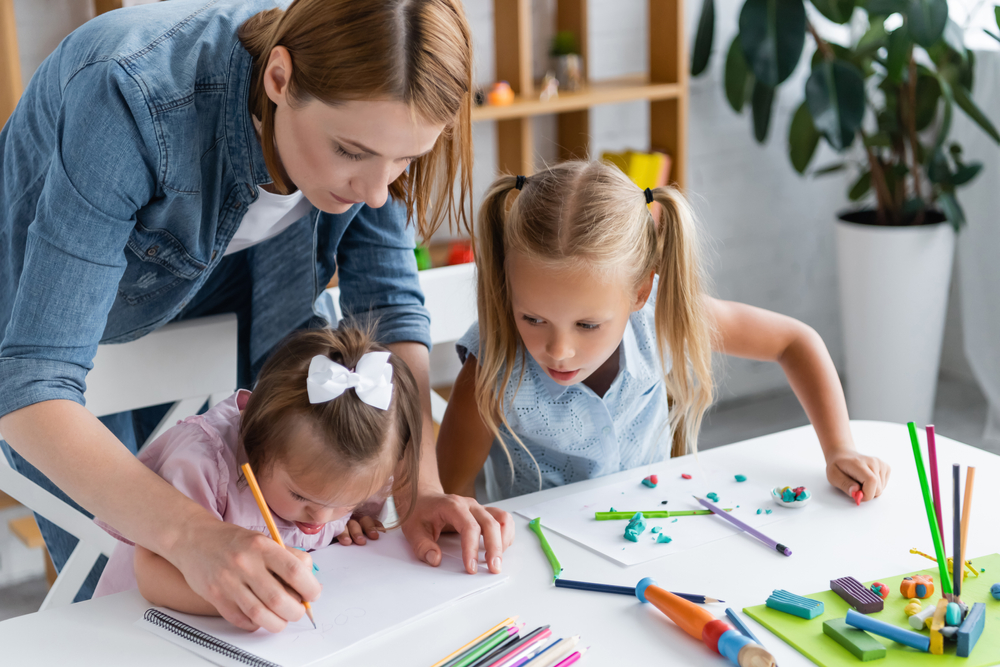
The use of “Play” as a tool for child development extends beyond entertainment; it provides young children with an opportunity to utilize playtime as a laboratory for their minds to explore and discover.
A quality early learning and development center utilizes “Play” in conjunction with other tactics to provide children with a strong foundation for their ability to build connections in their brain for how they think, speak, and learn about their world.
- Through storytelling, pretend play and conversation, children develop pathways in their brains to communicate with one another.
- Through trial and error, play supports problem-solving and critical-thinking skills for children.
- Children develop flexibility and creativity in their thought processes as they play.
Benefits Of Play In Early Childhood Education:
- Children who participate in active and engaging forms of play show better attention spans than those who play passively.
- Children involved in active play tend to regulate their emotions better and are more prepared for academic success.
- Simple play experiences that involve building with blocks, sunning shapes, exploring nature, etc. help children learn math and science concepts naturally.
- Additionally, quality early learning programs incorporate educational toys for preschoolers to enhance a child’s physical ability to move, coordinate and develop spatial awareness. Such toys empower a child to discover, create, and experiment with materials.
Daycare With Play-Based Learning Creates A Balanced Environment
Always look for a daycare with play-based learning because it is a setting that mixes structure with freedom. Play-based daycares can support self-expression while still offering routines that help children feel safe.
Through guided play, children learn:
- How to share and take turns
- How to express emotions in healthy ways
- How to cooperate with others
- How to ask questions and stay curious
Conclusion
From building towers to being a doctor or playing with friends, there are many ways for children to learn and develop through play. Play-based learning is unique, which provides children with the ability to learn in a way that works for them at their own natural rate of development, and ultimately helps them to develop who they are meant to become.
At Learn N Grow STEM Preschool, children are encouraged to explore, create, and use their imagination through thoughtfully designed PLAY-based and STEM-rich activities that build lasting skills.
Frequently Asked Questions
- What age should children start early childhood education in Frisco?
Most children begin early childhood programs between ages 2 and 4, depending on readiness. Starting early supports social, emotional, and cognitive development before kindergarten begins.
- How does play-based learning prepare children for kindergarten?
Play builds language, problem-solving, emotional control, and early math skills. These abilities help children transition into structured school settings with confidence.
- Are educational toys necessary for preschool learning?
Educational toys give pre-schoolers hands-on ways to explore and learn. But remember, everyday items like blocks, cups, and nature objects work just as well. Play-based learning (toys or simple materials) builds the brain, supports problem-solving, and helps kids develop social and emotional skills naturally.
- Does play improve attention in pre-schoolers?
Yes, active play like building, running, or pretending naturally strengthens a child’s ability to focus. Kids engaged in hands-on activities develop longer attention spans than those doing passive tasks.
- In what ways does play teach math and science?
A child playing with building blocks, shapes, and nature exploration will have firsthand experience with the introduction of many mathematical and scientific concepts. Kids learn counting, patterns, and spatial relationships simply through play.
Ahaa, its nice discussion regarding this post here at this webpage, I have read all that, so now me also commenting at this place.
These are in fact wonderful ideas in concerning blogging. You have touched some good points here. Any way keep up wrinting.
Dice games are surprisingly mathematical – probability really shapes strategy! Seeing platforms like jilissa app download apk offer diverse options is cool, especially with localized payment methods for Filipino players. KYC verification seems smart for security too!
Hola! I’ve been following your website for a while now and finally got the bravery to go ahead and give you a shout out from Atascocita Texas! Just wanted to tell you keep up the good job!
Hey! Someone in my Myspace group shared this site with us so I came to check it out. I’m definitely enjoying the information. I’m book-marking and will be tweeting this to my followers! Outstanding blog and outstanding design.
Hey there! I’ve been reading your blog for a while now and finally got the courage to go ahead and give you a shout out from Huffman Texas! Just wanted to say keep up the excellent work!
I’ll right away grab your rss as I can’t to find your e-mail subscription link or e-newsletter service. Do you’ve any? Please let me know so that I may just subscribe. Thanks.
This web site really has all the info I wanted about this subject and didn’t know who to ask.
I like what you guys tend to be up too. This sort of clever work and reporting! Keep up the great works guys I’ve added you guys to my personal blogroll.
Hi, its fastidious piece of writing concerning media print, we all be aware of media is a fantastic source of data.
I am sure this piece of writing has touched all the internet viewers, its really really nice article on building up new website.
Wow, this post is fastidious, my younger sister is analyzing such things, thus I am going to convey her.
Incredible! This blog looks exactly like my old one! It’s on a completely different subject but it has pretty much the same page layout and design. Outstanding choice of colors!
I am sure this post has touched all the internet people, its really really nice article on building up new web site.